ADU Design 101: Everything You Need to Know Before You Build
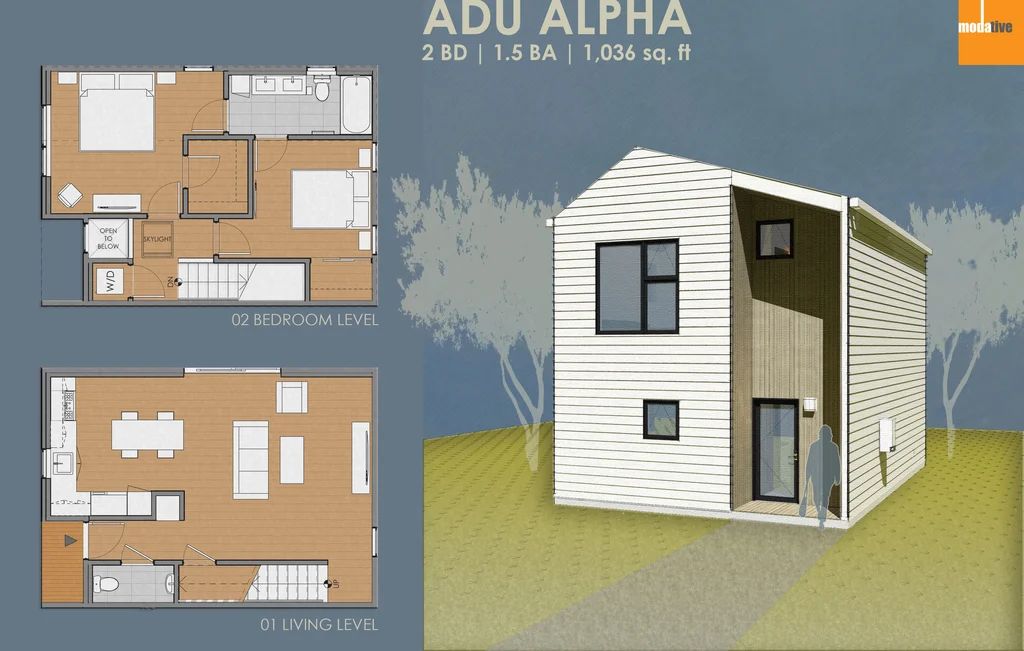
Accessory dwelling units — ADUs — are the fastest-growing housing typology in the United States, and for good reason. They allow homeowners to generate rental income from existing land, provide multigenerational housing options, or create housing supply in neighborhoods where new standalone construction is impossible. But designing a good ADU requires navigating a genuinely complex set of constraints: zoning, utility connections, structural coordination with the existing building, and the unique challenge of achieving livability within a compact footprint.
ADU Types and Their Design Implications
There are four primary ADU configurations, each with distinct design challenges. Attached ADUs share a wall with the primary residence; they’re structurally simpler (no new foundation required in many cases) but require careful attention to sound separation and independent access. Detached ADUs are freestanding structures on the same parcel; they have more design freedom but require full new foundations and utility connections. Garage conversions convert existing garage space to living area; they’re cost-effective but face challenges around ceiling height, fenestration (adding windows to what was an opaque structure), and slab-to-heated-floor conversion. Junior ADUs (JADUs) are carved from existing interior space within the primary residence — often a bedroom or basement — and are limited to 500 SF with internal access to the main house.
Zoning and Regulatory Navigation
ADU regulations vary dramatically by jurisdiction. California has among the most permissive statewide ADU laws in the country, preempting local restrictions in many cases. Oregon, Washington, and several other states have moved toward similar liberalization. But many jurisdictions still impose maximum ADU size limits (often 800-1,200 SF), minimum lot size requirements, owner-occupancy requirements, setback rules that restrict rear-yard placement, and parking replacement requirements.
Before beginning any ADU design, obtain the current ADU standards from your local planning or building department. Do not rely on secondhand accounts of local regulations — they change frequently. The critical questions: maximum ADU size, minimum setbacks from property lines, maximum height, utility connection requirements, and any owner-occupancy restrictions.
Floor Plan Principles for Compact Living
Good ADU design requires every square foot to earn its keep. The difference between a 600 SF ADU that feels spacious and one that feels cramped is almost entirely a floor plan question, not a square footage question. Key principles:
Maximize ceiling height. A 600 SF ADU with 9-foot ceilings feels dramatically larger than the same footprint with 8-foot ceilings. In garage conversions, this often means raising the roof — a significant cost, but typically worth it for livability.
Eliminate dedicated corridors. In a small unit, a corridor that exists only to connect rooms is wasted square footage. Instead, design rooms that connect directly to each other, or use multipurpose spaces (an entry vestibule that also functions as a coat closet; a dining nook that doubles as a workspace).
Use Murphy beds and convertible furniture strategically. In a studio or one-bedroom ADU, a wall bed with an integrated desk and sofa transforms the bedroom into a full living area during the day. This is not a compromise — it’s a legitimate design strategy for compact living.
Outdoor space extends the floor plan. A covered porch or small deck effectively adds to the livable area of a compact ADU, providing weather-protected outdoor living that feels connected to the interior. Even a 60 SF covered entry porch transforms the experience of arrival and departure.
Utility Connections and Cost Realities
ADU utility costs are among the most frequently underestimated in homeowner budgets. A detached ADU requires: water service (tap fee, new meter or sub-meter), sewer connection, electrical service (new panel, potentially new meter or sub-metering), gas (if applicable), and possibly a separate address and fire protection system. In many jurisdictions, new utility connections carry substantial connection fees independent of construction costs — in some markets, $20,000-$40,000 in fees before construction begins.
Attached ADUs and garage conversions can often piggyback on existing utility infrastructure, reducing connection costs significantly. This is one of the most important cost factors to evaluate early in the project.
Have a Project in Mind?
Our licensed architects are ready to help. Free initial consultation.